
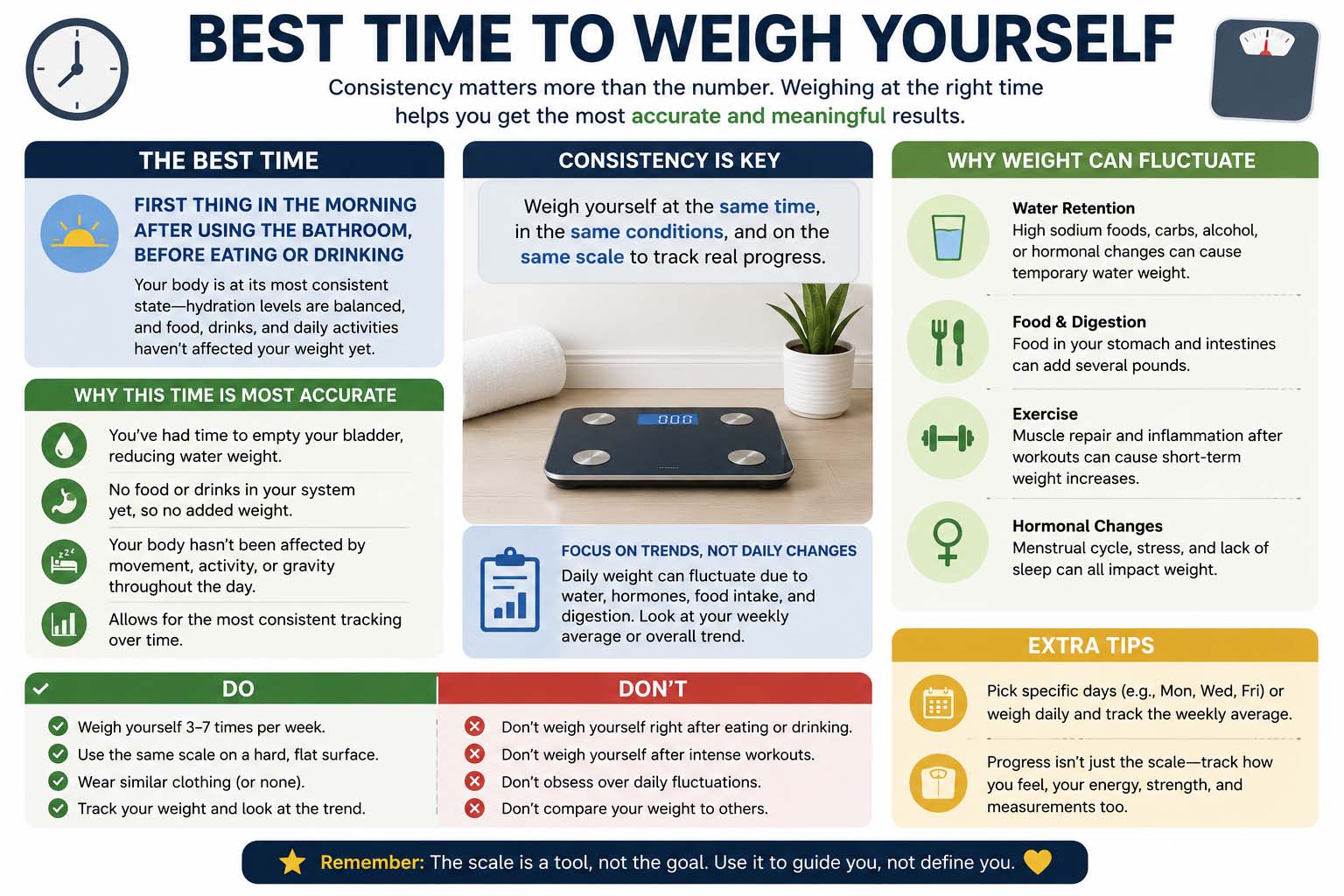
Tracking your body weight can be a useful part of maintaining a healthy lifestyle. Whether your goal is weight loss, muscle gain, or general wellness, understanding the best time to weigh yourself helps you get more accurate and consistent results.
Many people become frustrated when the number on the scale changes daily. However, body weight naturally fluctuates because of hydration, meals, exercise, sleep, and hormonal changes.
Why Weight Changes Throughout the Day
Your body weight constantly changes during the day.
Several factors influence these fluctuations, including:
- Food intake.
- Water retention.
- Physical activity.
- Sodium consumption.
- Hormonal changes.
- Sleep quality.
Because of these daily shifts, weighing yourself at random times often creates inconsistent readings.
When Is the Best Time to Weigh Yourself?
The best time to weigh yourself is usually in the morning after using the bathroom and before eating or drinking anything.
At this point, your body has had several hours without food intake, and excess water weight may be lower compared to later in the day.
Morning weigh-ins also reduce the impact of:
- Large meals.
- Fluid retention.
- Exercise-related swelling.
- Digestive changes.
Ultimately, consistency matters more than the exact number itself.
If you weigh yourself under similar conditions every time, your results become more reliable.
Best Time of Day to Weigh Yourself for Accuracy
Many people ask about the best time of day to weigh yourself because weight readings can vary significantly.
For example:
- Morning weight is usually the lowest.
- Evening weight may be several pounds higher due to meals and hydration.
- After workouts, temporary dehydration may lower scale readings.
- After salty foods, water retention can increase weight temporarily.
Therefore, morning remains the most recommended option because it creates the most stable baseline.
What Is the Best Time to Weigh Yourself During a Fitness Journey?
If you are trying to lose weight or build muscle, it is important to focus on long-term trends instead of daily fluctuations.
The best routine is:
- Use the same scale.
- Weigh yourself at the same time.
- Wear similar clothing or no clothing.
- Track weekly averages instead of obsessing over daily changes.
As a result, this approach helps reduce emotional stress connected to normal body fluctuations.
Additionally, understanding the best time to workout may help you build a more consistent fitness routine.
Likewise, information about when is the best time to workout may help you compare morning, afternoon, and evening exercise schedules.
Benefits of Weighing Yourself Consistently
Monitoring weight regularly can provide several wellness benefits when done in a healthy way.
Better Awareness
Regular tracking helps people notice lifestyle changes more quickly.
Improved Motivation
Seeing gradual progress can encourage healthier eating and exercise habits.
Long-Term Trend Tracking
Daily fluctuations matter less when you monitor overall weekly or monthly trends.
Support for Health Goals
Consistent tracking can help people stay accountable during fitness programs.
Common Causes of Sudden Weight Changes
People often panic after seeing sudden increases on the scale.
However, in many cases, these changes are temporary and unrelated to body fat gain.
Common causes include:
- High sodium intake.
- Poor sleep.
- Hormonal shifts.
- Menstrual cycles.
- Dehydration.
- Intense exercise.
- Large meals.
- Travel stress.
Therefore, understanding these causes helps reduce unnecessary anxiety about small fluctuations.
When’s the Best Time to Weigh Yourself Weekly?
Some people prefer weekly weigh-ins instead of daily tracking.
If you choose weekly monitoring, try weighing yourself:
- On the same weekday.
- At the same time.
- Under the same conditions.
Morning remains the best option because it reduces outside variables.
Weekly tracking can be useful for people who feel stressed by daily scale changes.
Exercise and Weight Fluctuations
Exercise affects body weight in multiple ways.
After intense workouts, muscles may temporarily hold extra water during recovery. As a result, this can slightly increase weight for a short time.
Strength training can also increase muscle mass over time, even while body fat decreases.
Because of this, the scale does not always reflect overall health improvements accurately.
Pairing weight tracking with:
- Progress photos.
- Measurements.
- Energy levels.
- Fitness performance.
can provide a more complete picture of progress.
For example, learning about the benefits of deadlifts may help you understand one strength-training movement that can support muscle development.
Similarly, exploring the benefits of a weighted vest may help you consider another form of resistance-based activity.
Hydration and Scale Accuracy
Water plays a major role in body weight.
Even mild dehydration can temporarily lower the number on the scale.
On the other hand, drinking large amounts of water or eating salty foods may increase temporary water retention.
For this reason, many experts recommend morning weigh-ins before eating or drinking.
It helps create a more consistent starting point.
Should You Weigh Yourself Every Day?
Daily weighing works well for some people but not everyone.
Research suggests daily tracking can improve awareness and consistency for certain individuals.
However, others may become overly focused on short-term fluctuations.
The healthiest approach depends on your mindset and personal goals.
If daily weigh-ins cause stress, weekly tracking may be a better choice.
Wellness Tips for Healthy Weight Tracking
- Focus on habits instead of small daily number changes.
- Use a digital scale placed on a hard, flat surface.
- Track patterns over several weeks instead of reacting emotionally to one measurement.
- Maintain realistic expectations during fitness journeys.
- Sleep, stress, and hydration all influence weight temporarily.
Additionally, understanding the best time to eat banana may help you consider how a nutritious snack fits into your daily routine.
Mistakes to Avoid When Weighing Yourself
Many people accidentally create inaccurate readings because of inconsistent habits.
Common mistakes include:
- Weighing yourself after meals.
- Using different scales.
- Checking weight at random times.
- Ignoring hydration effects.
- Comparing morning and evening weights.
For the most accurate results, consistency is more important than perfection.
Mental Health and Scale Anxiety
For some individuals, frequent weighing can negatively affect mental health.
Signs of unhealthy scale habits may include:
- Obsessing over small changes.
- Feeling anxious after weigh-ins.
- Constant body checking.
- Mood swings based on the scale.
If this happens, reducing weigh-in frequency or speaking with a healthcare professional may help.
Above all, health is about more than one number.
FAQ About the Best Time to Weigh Yourself
When Is the Best Time to Weigh Yourself?
Morning after using the bathroom and before eating or drinking is generally considered the best time.
Why Does My Weight Change Every Day?
Daily fluctuations happen because of water retention, food intake, hormones, and exercise.
Is It Better to Weigh Yourself Daily or Weekly?
Both methods can work. Ultimately, the best choice depends on your goals and emotional comfort.
What Is the Best Time to Weigh Yourself After Exercise?
Can Stress Affect Body Weight?
Yes. Stress can influence hormones, water retention, sleep, and eating habits.
Conclusion
Understanding the best time to weigh yourself can make health tracking more accurate and less stressful. Morning weigh-ins under consistent conditions provide the most reliable results for most people.
Body weight naturally changes throughout the day because of hydration, meals, exercise, and hormones. Instead of focusing on small daily fluctuations, it is healthier to watch long-term trends and maintain balanced wellness habits.